


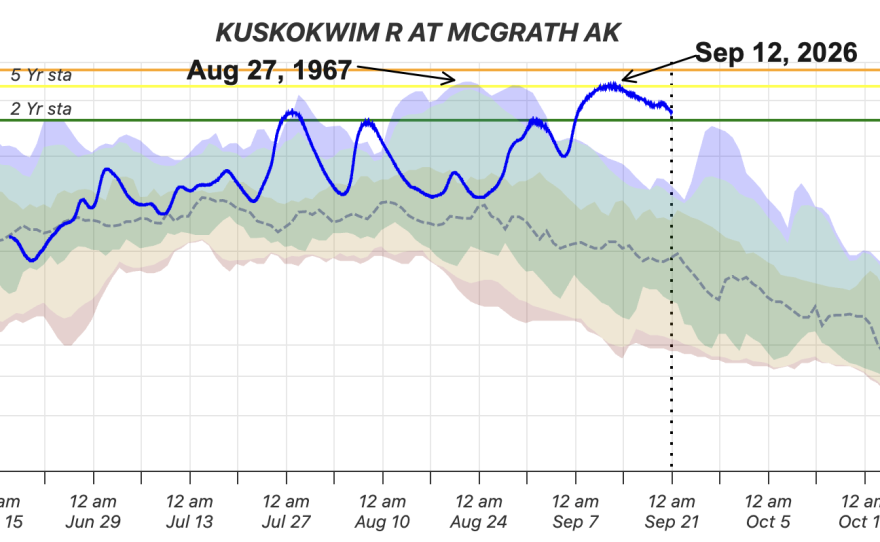
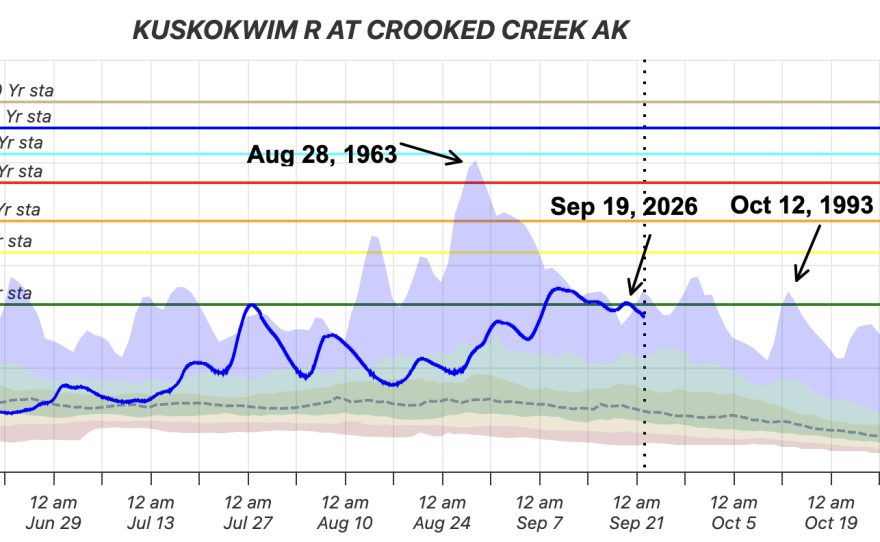
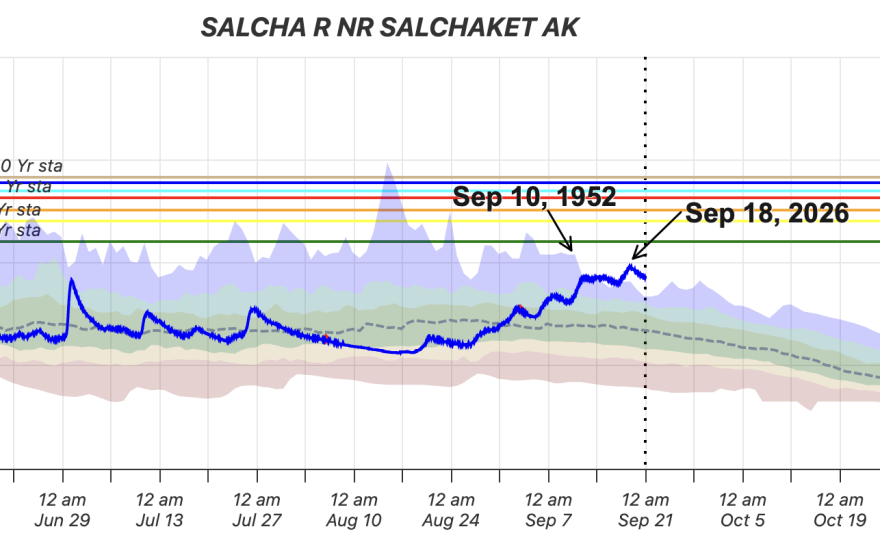
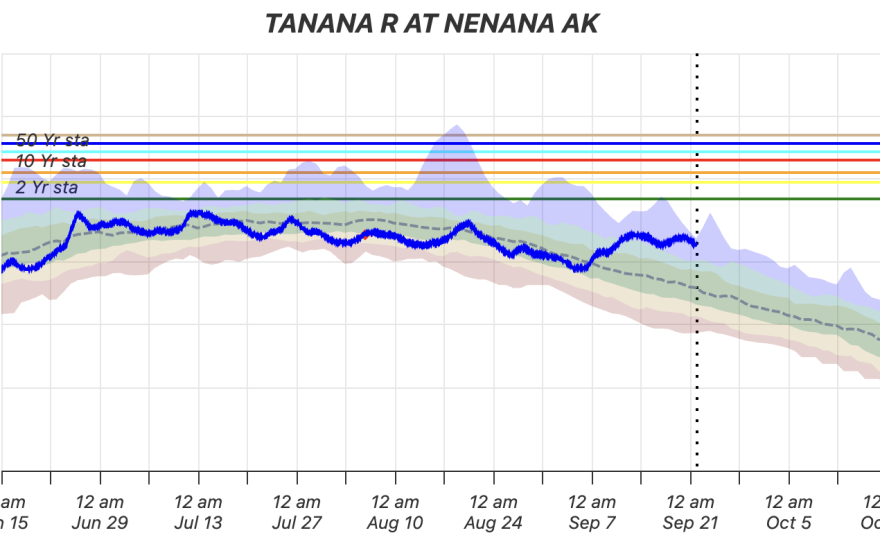
Heavy autumn rains have rivers running unusually high across Interior and Western Alaska, with some approaching water volume records set during the catastrophic 1967 Tanana Valley Flood.
Earlier this month, the Chena River reached a minor flood stage below the Moose Creek Dam.
The water was low enough that the Army Corps of Engineers didn’t need to open the dam’s gates to divert the water, but University of Alaska Fairbanks climate specialist Rick Thoman said there are still some public safety risks.
Thoman said boaters should be mindful of low clearance under bridges, and people in low-lying areas might see their basements flood.
“We can wind up with increased flow underneath the ice as it forms,” he said. “And then when that ice forms, it can be thinner. As those water levels drop during the winter, you can get larger areas of weak shelf ice.”
Thoman said that shelf ice can be dangerous for people traveling or recreating on the river.
Aufeis could bring trouble next year
Thoman said those problems could also extend into breakup season due to something called aufeis. Aufeis form when water flows over frozen ground, creating thick layers that can persist long after winter — and in some places, never fully melt.
Thoman said that in the spring, some aufeis can divert rivers over roads and into communities.
“The Steese Highway — Fox and up towards Montana Creek — that is an area that has historically had significant this aufeis problem with water flowing downhill, but then encountering frozen ground and getting squirted out,” he said.

Thoman said he can’t directly attribute this year’s wet fall to climate change, but that warmer ocean temperatures put more moisture into the atmosphere, increasing the potential for heavy rains.
Rivers are falling across the Interior as rain tapers off and temperatures cool, but Thoman said they could remain higher than normal for some time as water drains out of the uplands before freeze-up.